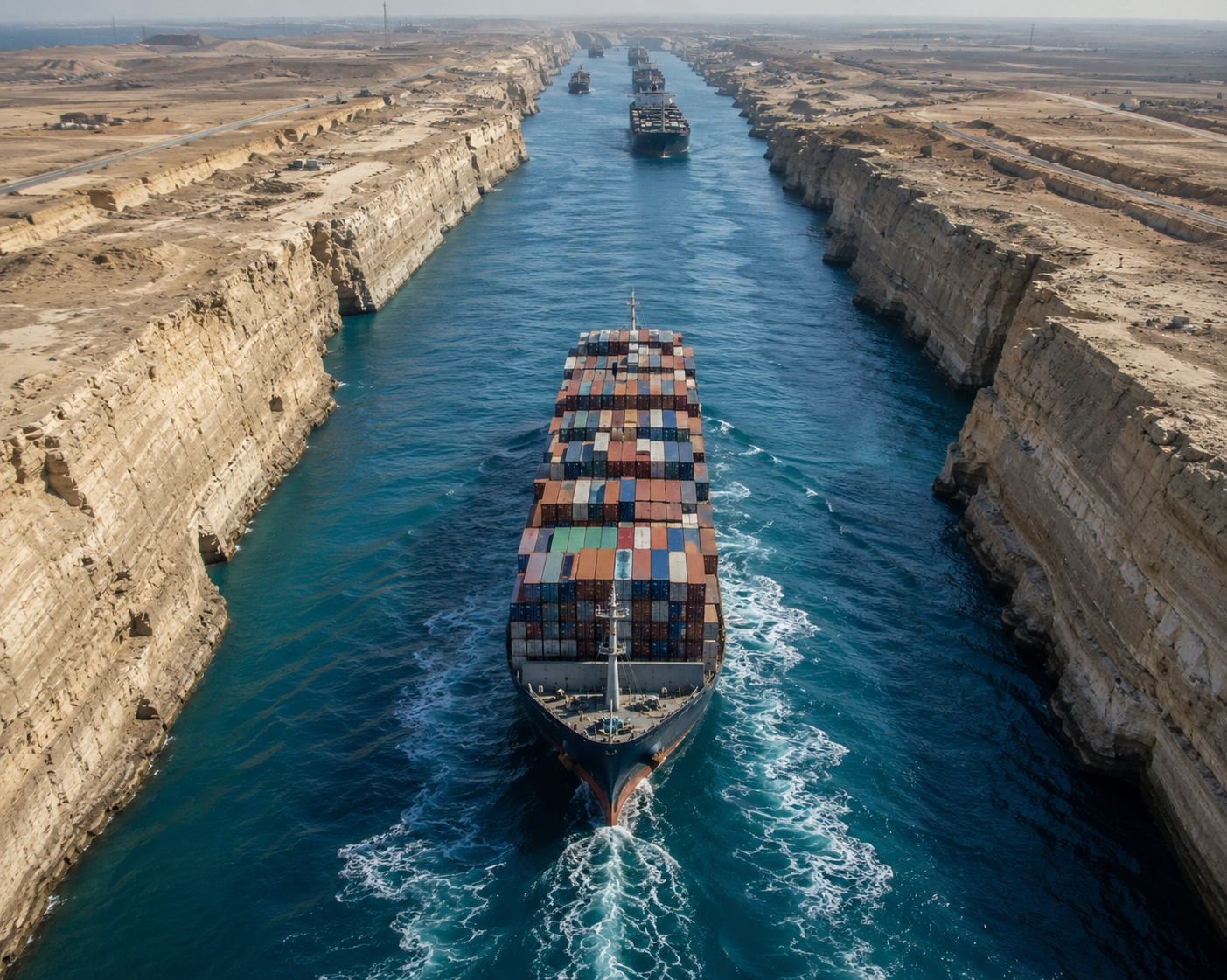
Twenty-one percent of the world's oil moves through a stretch of water just 33 kilometres wide. That is the Strait of Hormuz. And right now, it is exposing every company that confused efficiency with strategy.
When tensions escalated, businesses without a contingency plan didn't just pay more for shipping. They lost customers, missed targets and had nothing intelligent to tell their boards.
Efficiency without resilience is just slow-motion risk. It looks smart, until it breaks. The Strait of Hormuz is 33 kilometres wide. Your strategy should not be.
What that means is simple, a narrow strategy, one that bets everything on a single supplier, a single route or a single assumption about world stability, breaks the moment reality shifts. And reality always shifts. The companies that survived this disruption were not smarter. They were wider. Wider in their thinking, wider in their options and wider in how they saw the world map as a strategic document, not just a geography lesson.
The companies winning right now aren't the ones who predicted the conflict. They're the ones who planned for the possibility of one. They mapped their supply exposure before a crisis did it for them. They diversified routes because they understood that a single source dependency isn't lean, it's a liability in disguise. They treated PESTLE analysis not as a classroom tool but as an early warning system. And yes, they held slightly more inventory than their peers thought was optimal. That buffer? It is called optionality.
Ask Toyota what they learned after 2011. Resilience costs a little. Fragility costs everything.
Strategy is not about being right. It's about not being caught off guard.
So here's the question, is your business resilient or just efficient? Because the Strait of Hormuz just made that difference very very visible.
The Strait of Hormuz is narrow. The lesson is not.