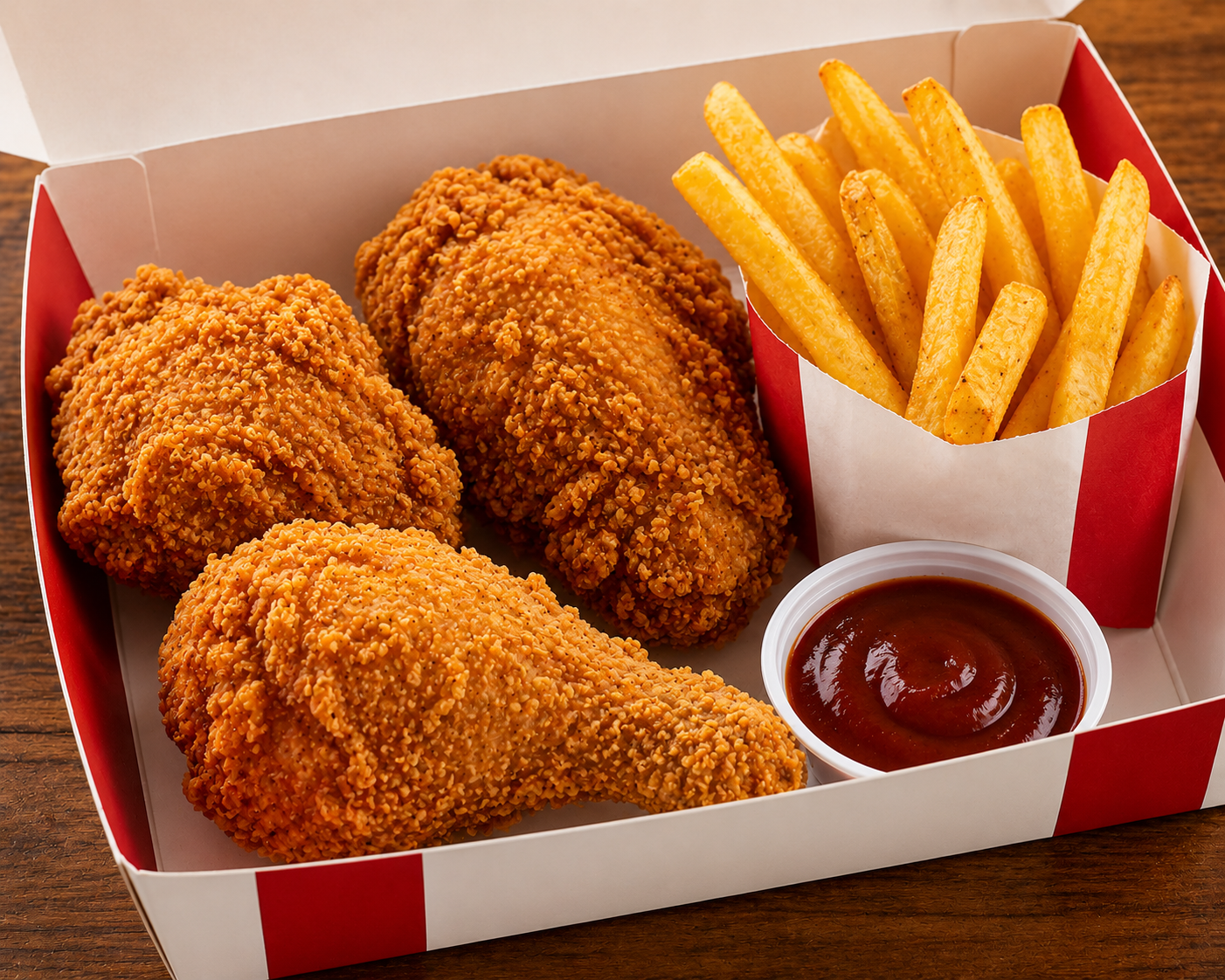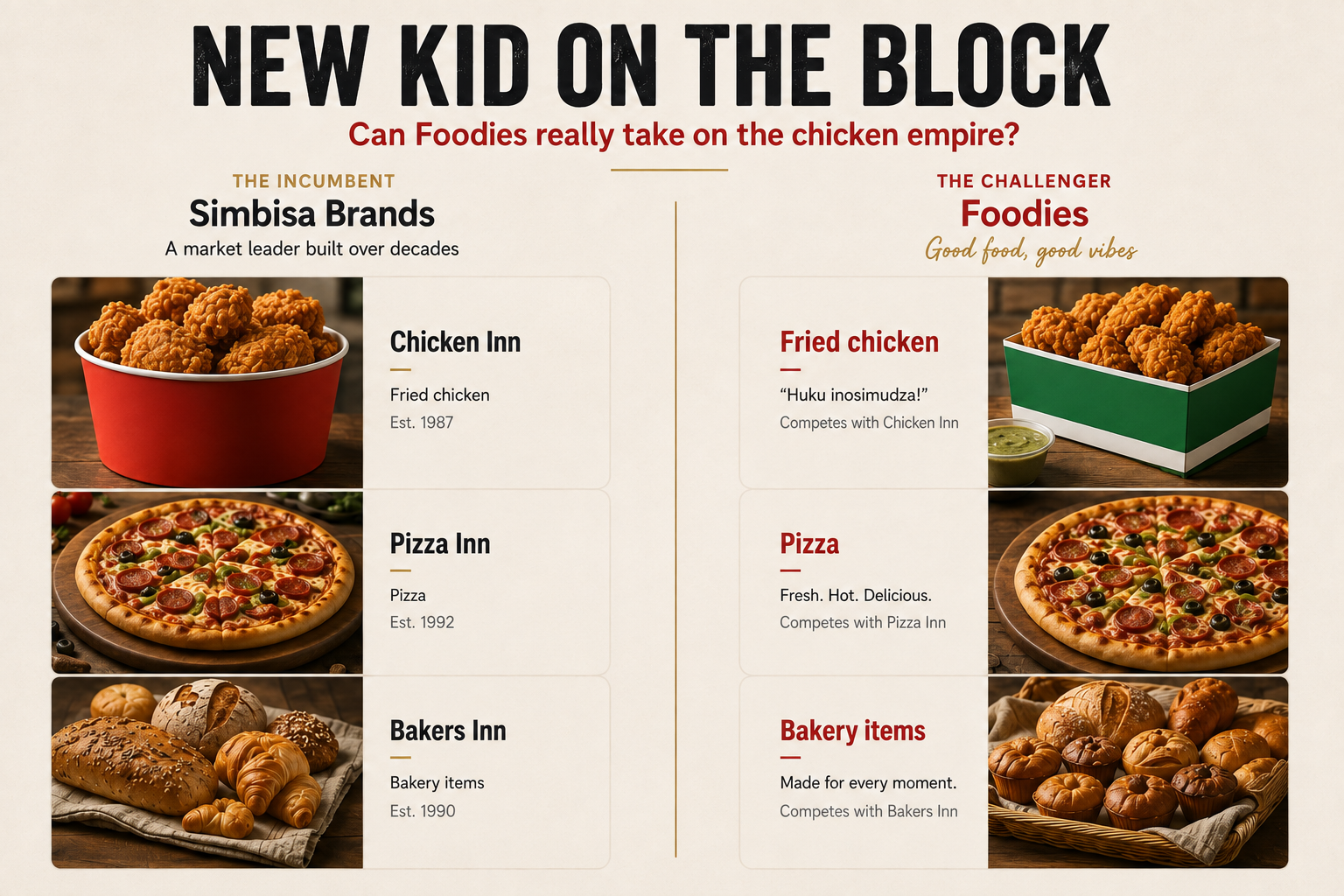
There is a new name making waves in Zimbabwe's fast-food industry and it is not shy about its ambitions. Foodies, the brainchild of Nash Paints founder Tinashe Mutarisi and his son Tinashe Mutarisi Jnr, opened its first outlet at Karigamombe Centre in Harare's CBD in December 2025. By late July 2026 it had pushed ahead with a second outlet in Machipisa, powering through on generators and gas equipment after ZESA failed to connect electricity to the site on time. The menu reads like a direct shot across several bows at once. Fried chicken, pizza and bakery items are served under the motto 'good food, good vibes.'
That combination is not an accident. Chicken, pizza and bakery items sit at the heart of three of Zimbabwe's best-known fast-food brands, Chicken Inn, Pizza Inn and Bakers Inn, all run by Simbisa Brands, the Innscor Africa subsidiary that also owns Creamy Inn and Nando's locally. Foodies is not nibbling at one competitor's plate. It has walked in and taken aim at three businesses owned by the same parent company.
Small, But Not Small Enough to Dismiss
It would be easy to look at two outlets against Simbisa's network [well over 150 Chicken Inn, Pizza Inn and Creamy Inn branches nationally, plus more than 30 Bakers Inn stores, built up over nearly four decades] and conclude the gap is too wide to matter. That would be a mistake and probably a costly one for anybody who makes it.
Two things should give the incumbents pause. First, Foodies is not a hope business, the kind of venture that opens with a banner and a prayer that footfall will simply arrive. It forms part of Nash Holdings, an established group with real capital, logistics and media assets already in motion around it, run by a founder with a track record of building a manufacturing brand from nothing into a household name. That is a very different animal from an informal takeaway chancing its arm.
Second, the timing is not isolated. Foodies is entering a market that is already being tested from multiple directions at once and none of the other challengers show any sign of slowing down. Hungry Lion has not fizzled out since its August 2025 entry at Greenfields. It has since added outlets at Eastgate Mall and Aspindale Mall in Harare, with queues reported at each new opening and its parent group has publicly committed to roughly 200 new stores across its markets this year. Pedros Flame Grilled Chicken, a South African chain, is separately preparing to roll out an initial ten stores locally. Whatever Foodies becomes on its own, it is arriving into a fast-food market being pulled at from several directions simultaneously and that changes the calculation for the market leader considerably.
Is Simbisa Actually Watching?
It would be naive to assume Foodies is not on Simbisa's radar, given that it is now pressing on three of the group's brands rather than one. Chicken Inn in particular has shown before that it notices when its territory is threatened and that it does not sit still. The introduction of a sadza option onto its menu some years ago was widely read as a defensive move to win back customers drifting to smaller informal outlets. The 'dollar meal' pricing promotion and repeated menu refreshes since tell the same story. This is a business that responds to pressure by moving on price and product, not by issuing statements.
What is genuinely unclear, and this is the more interesting question, is whether that response machinery has already been switched on for Foodies specifically, or whether it is still idling because the newcomer has not yet crossed a threshold worth reacting to. Two outlets is not yet a war. But a father-son team with serious backing, opening in high-traffic CBD locations and explicitly stating an ambition to put a Foodies branch in every town in Zimbabwe, is exactly the kind of early signal that a well-run incumbent should be pricing in now rather than later.
The Real Test Ahead
The more searching question is not whether Foodies can open outlets. Anyone with capital can open outlets. It is whether the business has assembled people who understand supply chain economics well enough to survive a price war against a rival that owns its own chicken supplier, its own meat processor and its own bakery infrastructure end to end. Simbisa's advantage has never really been its menu. It is the vertically integrated supply chain behind the counter, one that lets it absorb margin pressure that would sink a standalone entrant.
Foodies has the capital and the ambition to be taken seriously. Whether it has the operational depth to survive a determined counterattack rather than simply the appetite to start one is the question that will decide how this story unfolds. Zimbabwean fast-food customers, meanwhile, stand to be the clearest winners of whatever comes next.