The battle of the chickens
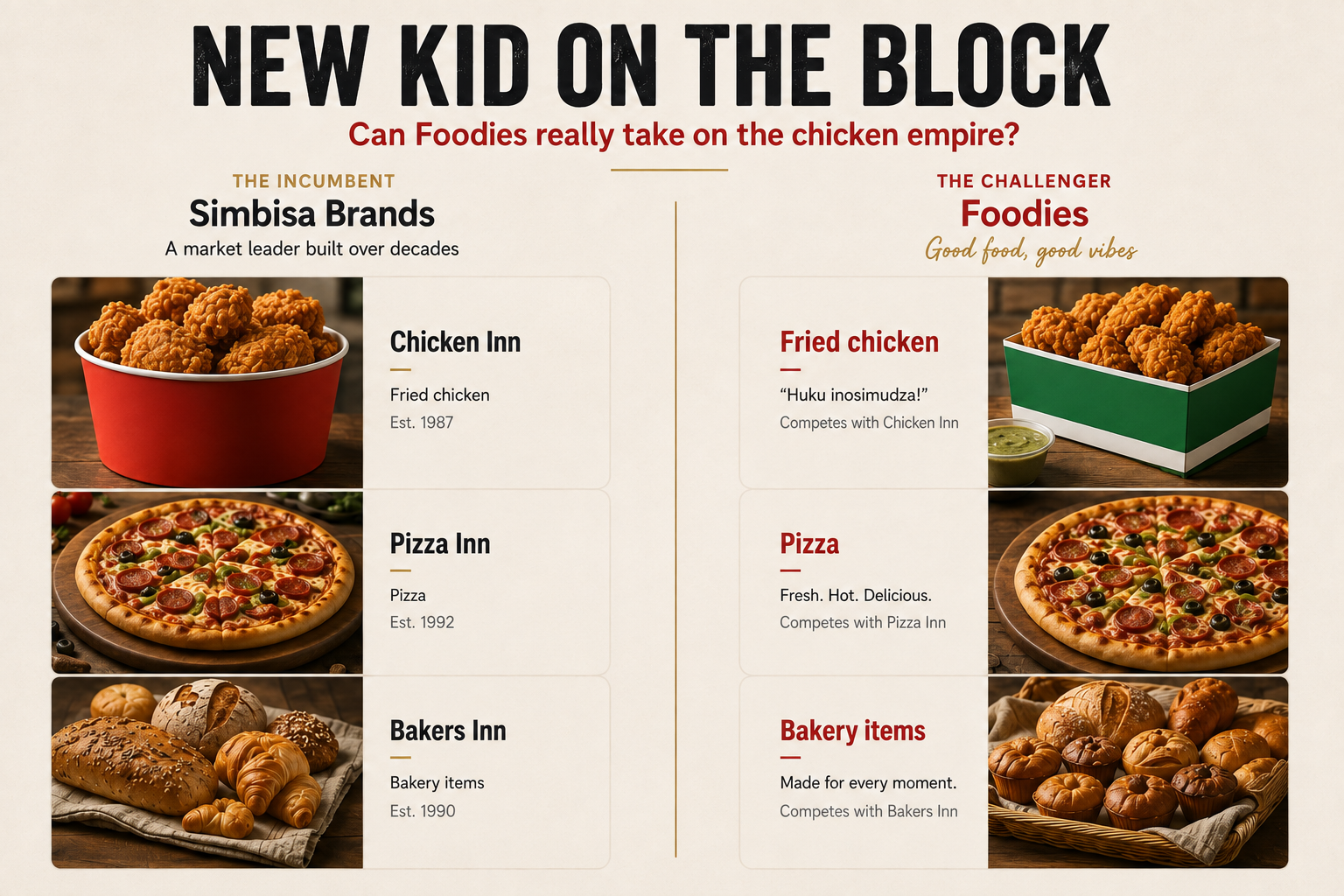
In Zimbabwe's fast-food industry, a thrilling battle has been unfolding among chicken giants. Chicken Inn [Simbisa], Chicken Slice [Packers International], and KFC [Kentucky Fried Chicken] have been engaged in a cutthroat competition, showcasing the principles of game theory. Let's dissect some of the strategies being employed by these players.
The Price War
Chicken Inn Zimbabwe's beloved chicken chain, initially faced formidable challenge from ‘newcomer’ Chicken Slice. Chicken Slice's aggressive pricing strategy aimed to undercut Chicken Inn, but the latter refused to back down, matching and even undercutting prices. This damaging price war exemplifies the Nash Equilibrium concept , where neither player can improve their payoff by unilaterally changing their strategy.
Uncontested Market
In hindsight, Chicken Inn acknowledges allowing Chicken Slice to operate uncontested in Mvuma was a strategic mistake. By not providing competition, Chicken Inn inadvertently enabled Chicken Slice to establish a foothold. However, Chicken Inn has since corrected this oversight, ensuring that no location is left uncontested.
Chicken Inn's Strategic Dominance
Contrary to perceptions, Chicken Inn remains vigilant about Chicken Slice. Their current strategy is still yielding desired results (so why change the winning formula?). By maintaining its market share and aggressive marketing policy, Chicken Inn has for now managed to suppress Chicken Slice's growth.
Chicken Inn and KFC: Superior Strategy Showdown
As Chicken Inn maintains its dominance over Chicken Slice, its focus shifts to competing with global giant KFC. Both chains now prioritize differentiation and innovation. KFC has introduced new menu items, emphasizing quality and convenience, while Chicken Inn has enhanced customer experience, launched loyalty programs, and expanded its menu offerings.
KFC's Strategic Shift
Notably, KFC has begun increasing prices for select products, signalling a shift from price competition to value-based differentiation. This strategic pivot acknowledges that competing solely on price is unsustainable. By focusing on quality, convenience, and brand prestige, KFC aims to attract customers willing to pay a premium.
Game Theory at Play
This battle illustrates key game theory principles: Strategic thinking: Strategists can take a rational, informed view of what competitors are likely to do and formulate a suitable response and if a strategy exists that allows a competitor to dominate us, our priority is to eliminate that strategy.
As the battle continues, Chicken Inn's strategic dominance is not guaranteed. Chicken Slice may adapt, and KFC's new strategy poses an intriguing challenge. The Zimbabwean chicken market remains a dynamic arena, with game theory guiding the players' every move. Will Chicken Inn maintain its lead, or will Chicken Slice and KFC devise successful counterstrategies? The outcome remains uncertain, but one thing is clear, only the most adaptable and innovative players will reign supreme.